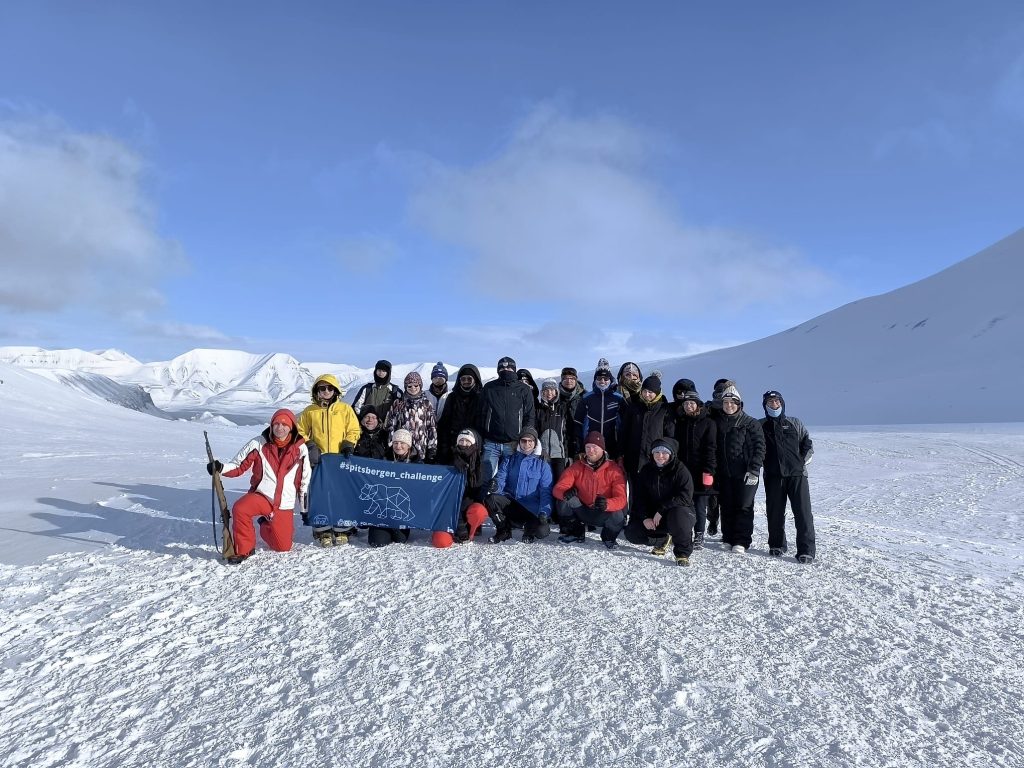

3rd Training School Spitsbergen – summer 2026
Photonic structure in Arctic environment
19-21 August 2026
COST Working Group meeting, Action CA21159, Understanding interaction light – biological surfaces: possibility for new electronic materials and devices (PhoBioS).
Various biological surfaces are known to be covered by elaborated micro- and nano-structures, serving a number of functions (e.g. anti-reflective, structural coloration, anti-fouling, pro- or anti-adhesive, etc.) and inspiring numerous industrial applications. Recent years have witnessed a remarkable boost in research in this field. To a large extent, this boost owes to the increasing interdisciplinary of approaches being applied to the study of structured biosurfaces. Sciences as different as classical zoology and botany are inseminated with the advances in genetics and molecular biology; biologists collaborate more and more with nanotechnologists, materials scientists and engineers – all these contribute to the widening of the horizons of research on micro- and nano-structured biological surfaces, and to biomimetic and bioengineering applications of these surfaces in industry. We aim at ‘riding the wave’ of these developments with our proposal. The main goal of the COST Action “Understanding interaction light – biological surfaces: possibility for new electronic materials and devices” is to bring together scientists coming from distinct disciplines into this vibrant field of research, focusing on the photonic effects of nano-and micro-structuring of biological surfaces and their bionic applications. Our consortium will ensure cross-inspiration among the different participants coming from different research fields and will boost innovation in research and eventual industrial developments.
Selection Annoencement
Selection rules Spitsbergen 2026
Programme
Day 1: 9 June 2026
| 09:00–09:30 | Registration and Welcome |
| 09:30–10:00 |
Opening Ceremony Director: Sahika Sena Bayazit, Director of the Institute of Nanotechnology and Biotechnology Organizing Committee: Małgorzata Szczerska, Action Chair; Merve Erginer, Local Organizer |
| 10:00–10:30 | Caner Ünlü — “Quantum Dots for Plant Science: Synthesis, Properties, and Applications” |
| 10:30–11:00 | Paweł Wityk — “Fiber-Optic Biosensors and Multi-Omics Profiling for Translational Diagnostics” |
| 11:00–11:30 | Coffee Break |
| 11:30–12:00 | Małgorzata Szczerska — “Optical Biosensing: Principles and Applications in Medical Analysis” |
| 12:00–12:30 | Huseyin Uvet — “Opto-Mechatronics: Holographic Imaging for Single Cell Analysis and Cancer Diagnosis” |
| 12:30–14:00 | Lunch Break |
| 14:00–14:30 | Aneta Łuczkiewicz — “Past, Present, and Future of Wastewater-Based Epidemiology” |
| 14:30–15:00 | Jacek Lubinski — “Tribological Wear: A Public Health Threat and a Diagnostic Challenge” |
| 15:00–15:30 | Fırat Barış Barlas — “Fluorescent Smart Surfaces and Drug Delivery Systems for Biological Applications” |
| 15:30–16:00 | Sebastián García Galán — “The Relevance of Explainability in Healthcare AI” |
| 16:00–16:30 | Coffee Break |
| Student Presentations | |
| 16:30–16:50 | Bilge Ölçeroğlu — “Metal–Organic Framework–Peptide (Myxinidin) Conjugates” |
| 16:50–17:10 | Eren Özbay — “Carbon Dot-Based LED Devices and Fluorescent MOFs for Innovative Optical Chemical Sensors in Environmental Applications” |
| 18:30–21:00 | Social Night Out and Dinner Venue to be announced |
Day 2: 10 June 2026
| 09:00–10:30 | C-dot Synthesis Group 1 and Group 2 |
| 09:00–10:30 | Cell Culture Techniques: Cell Thawing, Cell Freezing and Subculturing Group 3 and Group 4 |
| 10:30–11:00 | Coffee Break |
| 11:00–12:30 | C-dot Synthesis Group 3 and Group 4 |
| 11:00–12:30 | Cell Culture Techniques: Cell Thawing, Cell Freezing and Subculturing Group 1 and Group 2 |
| 12:30–13:30 | Lunch Break |
| 13:30–15:30 | Cell Seeding Group 1 and Group 2 |
| 13:30–15:30 | Cell Imaging Group 3 and Group 4 |
| 15:30–16:00 | Coffee Break |
| 16:30–17:30 | Cell Seeding Group 3 and Group 4 |
| 13:30–15:30 | Cell Imaging Group 1 and Group 2 |
Day 3: 11 June 2026
| 09:00–10:30 | Treatment and MTT Group 1 and Group 2 |
| 09:00–10:30 | Animal Imaging Group 3 and Group 4 |
| 10:30–11:00 | Coffee Break |
| 11:00–12:30 | Treatment and MTT Group 3 and Group 4 |
| 11:00–12:30 | Animal Imaging Group 3 and Group 4 |
| 12:30–13:30 | Lunch Break |
| 13:30–15:30 | Data Analysis Group 1, Group 2, Group 3 and Group 4 |
| 15:30–16:00 | Coffee Break |
| 16:00–17:00 | Closing Remarks |
Venue & travel
The meeting will take place at Spitsbergen Kunstnersenter / Artists Center
Address: Vei 100.02, Longyearbyen, Svalbard
How to reach Longyearbyen?By Airplane:
Longyearbyen Airport (LYR). It is the only airport on the island. From the airport you can get to the hotel and the conference venue by bus or taxi.
Hotels in Longyearbyen:We suggest and offer group bookings due to the nature of the city and the limited number of hotel rooms available at this time.